
Section 80EEB Explained: Save Tax on Your EV Car Loan
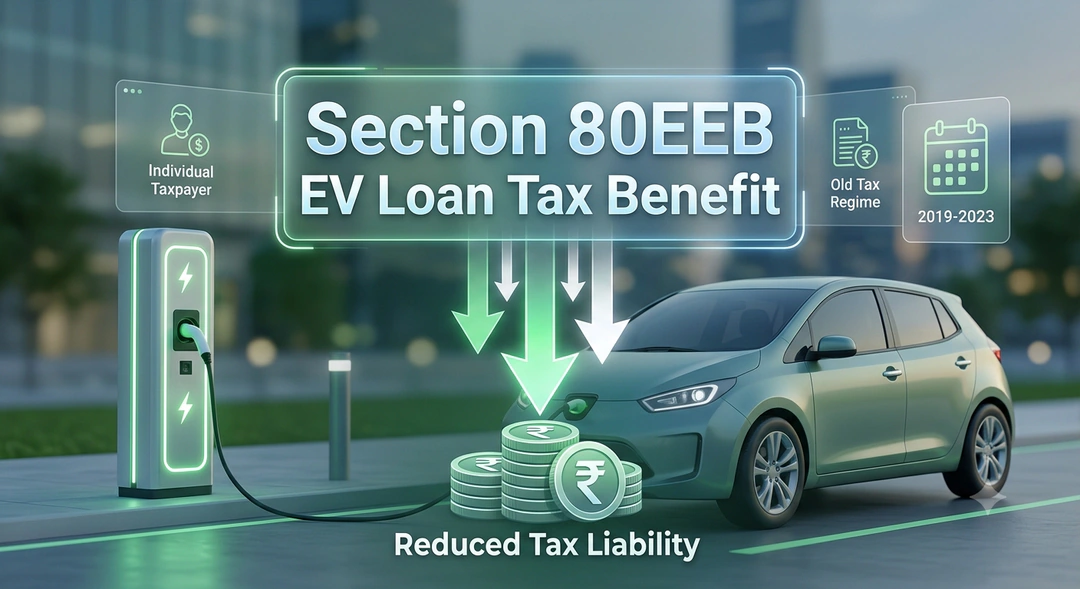
Buying an electric car on loan? There's a tax break most first-time buyers never hear about until their CA mentions it at filing time. It's called the Section 80EEB EV loan tax benefit, and it can quietly shave a real chunk off your annual tax bill, provided you got the timing right.
Here's the thing about this deduction: it rewards a decision you'd already made for other reasons (lower running costs, less noise, no petrol pump queues) with an additional financial upside that many owners simply forget to claim. So let's walk through exactly what it covers, who qualifies, and how to actually use it.
What Section 80EEB Actually Covers
Section 80EEB was introduced in the 2019 Union Budget as a direct nudge toward electric mobility. It lets an individual taxpayer deduct the interest paid on a loan taken to buy an electric vehicle, up to ₹1.5 lakh in a financial year.
Not the principal. Just the interest. That distinction trips people up constantly, so it's worth repeating: your EMI has two components, and only the interest slice qualifies here.
The vehicle itself can be a two-wheeler or a four-wheeler, as long as it runs purely on an electric motor with a traction battery. Hybrids don't make the cut: the vehicle needs to be a genuine EV, not a petrol-electric compromise.
Who Actually Qualifies for the Section 80EEB EV Loan Tax Benefit
This is where a lot of enthusiasm gets deflated. The Section 80EEB EV loan tax benefit is restricted to individual taxpayers. Companies, HUFs, partnership firms, and AOPs are excluded entirely, even if the vehicle sits on their books.
A few conditions decide whether you're eligible:
The loan must be sanctioned by a recognised financial institution or NBFC, not a private lender or informal arrangement.
You must be filing under the old tax regime. The new regime doesn't recognise this deduction at all, so if you've switched, this benefit isn't available to you this year.
Crucially, the loan needs to have been sanctioned between 1 April 2019 and 31 March 2023. Loans taken after that window don't qualify for a fresh claim, even though the vehicle purchase itself is still perfectly eligible for other EV incentives.
That last point catches out a lot of people researching this in 2026. If you're currently repaying a loan sanctioned within that window, you can keep claiming the deduction every year until the loan closes. If your loan was sanctioned after March 2023, though, Section 80EEB simply won't apply to you, no matter how green your vehicle is.
How Much You Can Actually Save
Say you borrowed ₹9 lakh in 2022 to buy an electric hatchback, and this year's interest payout comes to ₹1.3 lakh. You can deduct the entire ₹1.3 lakh from your taxable income. Push that interest figure past ₹1.5 lakh, and the deduction simply caps there. Anything above the ceiling doesn't spill over, though business users may be able to treat the excess as a business expense under separate provisions.
Scenario | Interest Paid | Deduction Under 80EEB |
|---|---|---|
Electric scooter loan | ₹40,000 | ₹40,000 (full amount) |
Electric car loan | ₹1,20,000 | ₹1,20,000 (full amount) |
Electric car loan (higher interest year) | ₹1,90,000 | ₹1,50,000 (capped) |
It's a modest sum against the total cost of ownership, sure. But stacked against lower fuel costs, reduced maintenance, and state-level road tax exemptions many EV owners already enjoy, the Section 80EEB EV loan tax benefit adds a meaningful layer to the overall savings picture: not the whole story, but a welcome slice of it.
Claiming It: The Paperwork Nobody Enjoys
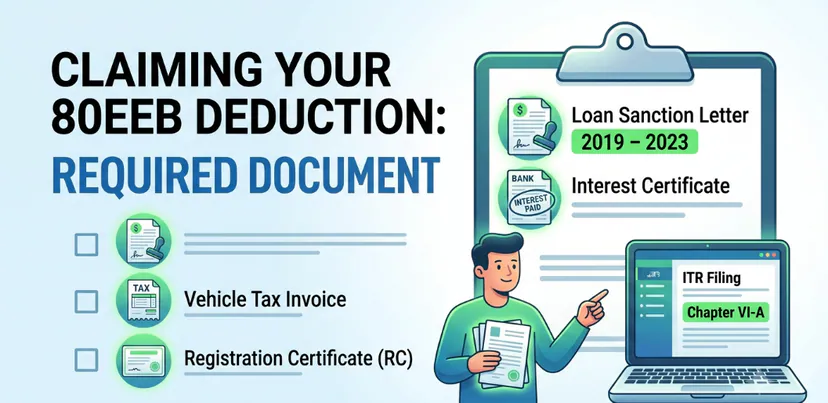
Nobody loves this part, but it's short. You'll need:
The loan sanction letter, showing the date it falls within the eligible window
An interest certificate from your lender for the financial year
The vehicle's tax invoice and registration certificate
At filing time, the deduction sits under Chapter VI-A of your return: ITR-1 if you're salaried, ITR-3 or ITR-4 if you're self-employed or running a business alongside your EV purchase. Keep the documents on hand even after filing; assessing officers do occasionally ask for them during scrutiny.
One more thing worth knowing: once you've claimed interest under Section 80EEB, you can't claim the same interest amount again under any other section, in this year or a future one. It's a one-shot deduction against that specific interest outlay.
Is It Still Worth Researching in 2026?
Only if your loan falls inside that 2019–2023 sanction window and you're still repaying it. If you're shopping for an EV now, on a fresh loan, this particular section won't apply to your purchase, but that shouldn't discourage the decision itself. Electric vehicles today come with lower running costs, improving range, and a maturing charging network that makes ownership far less of a leap of faith than it was when 80EEB first launched.
If you're still comparing models, budgets, and financing options before making that call, a marketplace like EVSoch is a useful place to line up EVs side by side and see what actually fits your usage and budget, tax benefit or not.
The Section 80EEB EV loan tax benefit was never meant to be the headline reason to go electric. It's a bonus for people who'd already decided, structured to reward good timing on the loan. Know where you stand on that timeline, keep your paperwork tidy, and the deduction takes care of itself.