
Porsche Cayenne Electric: What We Know So Far
Porsche's first electric Cayenne is on sale in India from Rs 1.76 crore — here is everything confirmed so far: PPE platform, 113 kWh battery, 400 kW charging and the 1,156 PS Turbo.
The Porsche Cayenne Electric is no longer a rumour. It is on sale in India at Rs 1.76-2.26 crore ex-showroom, having been unveiled in November 2025 as the fourth-generation Cayenne. It is the first all-electric Cayenne and Porsche's most powerful production road car ever, with the Turbo variant making 1,156 PS (1,140 bhp) and 1,500 Nm. Here is everything that has been confirmed so far, covering the PPE platform, the battery and the charging speeds, all drawn from the vehicle's current specification data.

What the Cayenne Electric is built on
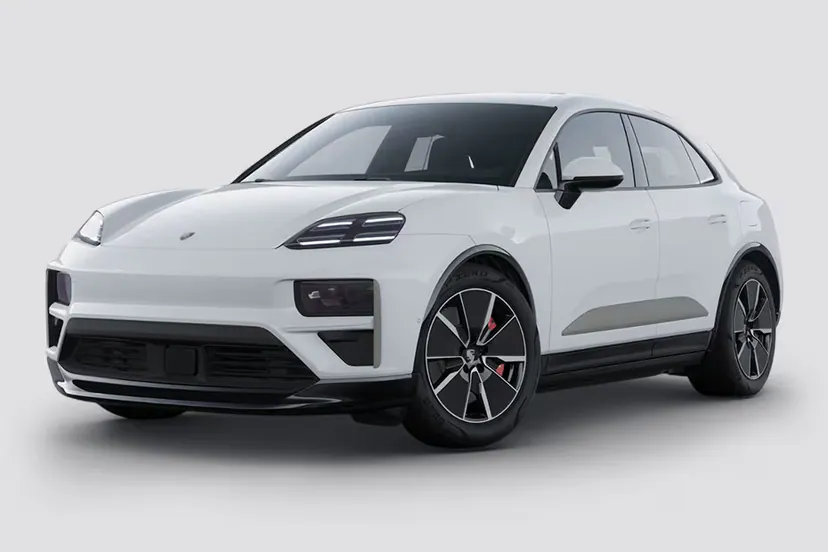
The electric Cayenne sits on the Premium Platform Electric (PPE) architecture that Porsche already uses for the Macan Electric. That means an 800V electrical system, which is the engineering reason behind the headline charging figures: on a DC fast charger rated up to 400 kW, the battery recovers 10-80% in as little as 16 minutes. Regenerative braking can recover up to 600 kW of energy back into the pack.
Both Indian variants use a 113 kWh lithium-ion battery (Li-NCMA chemistry, 108 kWh net usable) with a dual-motor all-wheel-drive layout, one motor per axle. The shared pack is what makes the range comparison between trims a straight power-for-range trade: the Standard is rated at 642 km and the Turbo at 623 km, both WLTP claims that will sit lower in real driving.
16 minutes takes the Cayenne Electric from 10-80% on a 400 kW DC charger. The payoff of its 800V PPE architecture.
The two trims: Standard vs Turbo
Two variants are on offer in India. The Cayenne Electric Standard is priced at Rs 1.76 crore and produces 436 bhp with 835 Nm, doing 0-100 km/h in 4.9 seconds and topping out at 230 km/h. The Cayenne Electric Turbo costs Rs 2.26 crore and develops 1,156 PS (1,140 bhp) with 1,500 Nm, reaching 100 km/h in 2.5 seconds and running to 260 km/h, enough to make it the most powerful production Porsche ever sold.
Both share the 747-litre boot, five seats, adaptive air suspension and Level 2 ADAS with Innodrive. The cabin runs a 14.25-inch OLED instrument cluster alongside a 12.25-inch curved OLED display, with Android Auto and Apple CarPlay both supported.
Exterior trim is handled with ten electric-only paint shades, from Electric Monteverde Metallic through Electric Algarve Blue Metallic, and the 4,985 mm length and 1,980 mm width give it proper road presence. Kerb weight is 2,645 kg. That is the cost of a 113 kWh pack in an SUV body, and it shapes both the ride and the handling limits.
Charging and running realities
Fast charging is the Cayenne Electric's strongest argument. Beyond the 400 kW DC figure, the onboard 11 kW AC charger fills the pack from empty in roughly 10 hours, which is fine for home overnight charging. The 800V architecture also means the charging curve holds up over repeated stops, so a long highway drive is interrupted by short, meaningful top-ups rather than long waits.
The honest caveats: this is a 2,645 kg SUV, so efficiency is not its game, and real-world range will fall short of the 642 km and 623 km claims depending on pace, load and climate. At 4,985 mm long and 3,024 mm of wheelbase, it is a genuinely big car, and while the air suspension handles the mass well, reviewers note the steering lacks the sharpness of the electric Macan's.

Market status and context
Launched directly into Indian showrooms rather than announced for a future date, the Cayenne Electric is available now, market status is Available, not Upcoming. Regional pricing shows the Standard from roughly Rs 1.78 crore in Delhi and Mumbai, and the Turbo from about Rs 2.29 crore, with Bengaluru pushing toward Rs 2.54 crore for the Turbo.
Its rivals are the obvious big-electric-SUV set: the BMW iX and the Audi Q8 e-tron at the value end, and the Mercedes EQS SUV further up. Against them, the Cayenne Electric's pitch is a claimed 642 km range, 400 kW charging and a 2.5-second Turbo that no competitor in this segment matches.
Who this is for
This is for buyers who want a genuine Porsche that does the family-SUV job: five seats, a 747-litre boot, real charging speed and the badge. The Standard is the everyday pick. Its 436 bhp, 642 km claimed range and 4.9-second sprint cover commuting and road trips without drama. The Turbo exists for those who will trade 19 km of claimed range for the most powerful Porsche ever built.
It is not for you if you want efficiency, bargain pricing or a light-footed handler. At Rs 1.76-2.26 crore and 2.6 tonnes, this is an expensive, heavy luxury SUV, and if you never use a 400 kW charger the headline 16-minute figure does not change your week. Buyers should also confirm battery warranty terms with their Porsche Centre, since Porsche has not published a fixed battery warranty figure for the Cayenne Electric on the listing.
Bottom line
What we know so far is a complete package, not a teaser: the Cayenne Electric is here, on sale, with 400 kW charging, a 642 km WLTP claim on the Standard and a 1,156 PS Turbo that rewrites Porsche's own record book. The platform is proven on the Macan Electric, the charging is genuinely fast, and the price is what you would expect for the badge. If the figures hold up in real-world use, the biggest question left is not whether Porsche can build it. It is whether the Indian charging network lets owners see that 16-minute promise.