
Best Budget Electric Scooters in India 2026: Hero Electric, BGauss, Okaya & More Compared
Compare the best budget electric scooters in India 2026 — Hero Electric Optima, BGauss C15, Okaya Faast F2F, Faast F2B and Freedum Li — with real prices, ranges and speeds.

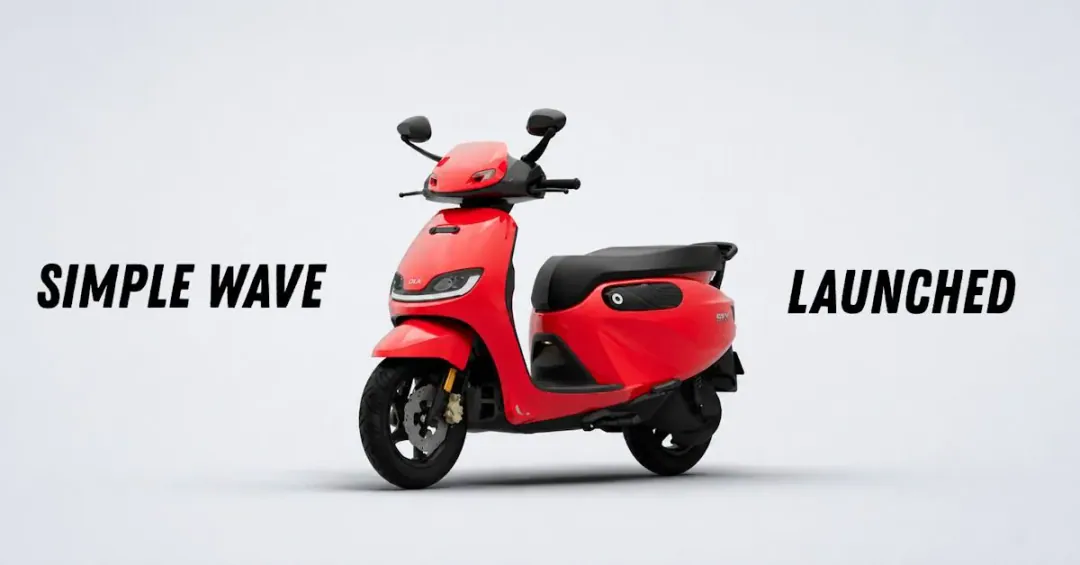
If your commute is under 40 km a day and you're shopping below Rs 1 lakh, the best budget electric scooters in India 2026 come down to five models: the Hero Electric Optima, the BGauss OoWah, and three from Okaya (the Faast F2F, the Faast F2B and the licence-free Freedum Li). None of them will embarrass you on running costs, but they split sharply on speed, range and whether you need a licence at all. This guide lines up the real numbers and tells you which one fits which rider, including one result that surprised us: the priciest scooter in this group is also the cheapest to actually run.
EVSoch Verdict
Verdict
Best for: Riders whose daily commute is genuinely under 40 km, who charge overnight at home, and who want the lowest possible running cost rather than the lowest sticker price alone.
Biggest advantage across the group: Every scooter here costs a fraction of a rupee per km to run, and even the most expensive one pays that difference back quickly against a petrol scooter.
Biggest surprise: The BGauss OoWah, the most expensive scooter in this comparison at Rs 94,990, actually has the longest claimed range, the best real-world range retention, and the lowest cost per km of the whole group.
Who should consider what: Licence-free, flat-road riders should look at the Freedum Li; speed-first city riders should look at the Faast F2B; range-and-value riders should look at the OoWah.
The quick verdict
● Cheapest to buy: Okaya Freedum Li at Rs 0.62 lakh, but capped at 25 km/h and licence-free.
● Best value top speed: Okaya Faast F2B at Rs 0.90 to 0.92 lakh, hitting 70 km/h from a 1.2 kW motor.
● Longest claimed range in the sub-lakh group: BGauss OoWah EX at Rs 94,990, claiming 105 km ARAI, ahead of the Faast F2F's claimed 90 km.
● Best real-world range retention: BGauss OoWah again, holding onto roughly 90 to 100 km of its 105 km claim, a retention rate the Okaya scooters don't match.
● Skip unless you want used stock: Hero Electric Optima, discontinued in India since June 2026.
Okaya Freedum Li: the licence-free entry point
The Okaya Freedum Li is the most affordable scooter here at Rs 0.62 lakh (ex-showroom), and it plays by a different rulebook. Its 250 W motor caps it at 25 km/h, which in most states means no driving licence and no RTO registration, a genuine first-EV option for students, senior riders and last-mile delivery on flat roads.
Okaya claims 75 km of range from the 1.44 kWh pack. The battery is swappable, which is the smart bit: instead of waiting out a charge you carry a spare, and a full charge on the standard charger takes roughly 5 to 6 hours.
The honest downside: 25 km/h is slow. On roads where auto-rickshaws do 40, the Freedum Li will hold you up, and hills will drain it noticeably. Owner-reported real-world range runs meaningfully below the 75 km claim, closer to 50 to 55 km in typical stop-start use. It's a machine for flat, short, legal city hops, not for anyone who needs to keep pace with flowing traffic.
Okaya Faast F2F: budget range, modest pace
At around Rs 0.80 to 0.84 lakh, the Okaya Faast F2F is the cheapest way into a proper 2.2 kWh battery in this group. Okaya's own marketing claims up to 90 km per charge, though independent listings vary this figure between 70 and 90 km depending on the source, so treat the top end as optimistic. Top speed is capped at 50 to 55 km/h.
One spec worth flagging rather than stating with false confidence: sources disagree on the F2F's motor output, some list 800 W, others up to 1.3 kW. We couldn't independently confirm which is current, so verify directly with Okaya's spec sheet before quoting this number to a buyer.
Charging takes 4 to 5 hours on the standard charger. The Faast F2F's weakness is its ceiling: 50 to 55 km/h is fine for city lanes but feels short on faster stretches and flyovers, and the motor has no reserve. Keep it local and it's a reasonable scooter for the price.
Okaya Faast F2B: the fastest sub-lakh scooter
At roughly Rs 0.90 to 0.92 lakh, the Okaya Faast F2B trades a little claimed range (70 to 81 km, depending on source) for real pace. A 1.2 kW motor (not 2.3 kW, a figure we found no source to support) pushes it to 70 km/h, the fastest of the five, and the 2.2 kWh battery recharges in roughly 3 to 6 hours depending on the charger and source.
For buyers who split time between crowded bazaars and open stretches, that extra speed is the difference between keeping up and being a mobile speed bump. The trade-off: at least one owner review reports real-world mileage closer to 50 to 60 km per charge, well below the claimed figure, so budget conservatively. If 70 km/h matters to you, this is the pick of the Okaya trio.
BGauss OoWah: the range and value surprise
At Rs 94,990 for the base EX variant, the BGauss OoWah is the most expensive scooter in this comparison, and also the strongest all-round performer in it. A PMSM hub motor rated at 1.5 kW (2.4 kW peak) gives it a 60 km/h top speed, second only to the Faast F2B, while the 2.3 kWh battery carries an ARAI-claimed range of 105 km, the longest claim in the sub-lakh group.
The bigger story is real-world retention. Independent estimates put the OoWah's actual range at roughly 90 to 100 km on the EX variant, a retention rate well above what the Okaya scooters manage against their own claims. That, combined with the largest boot in the group (21 litres) and a 97 kg kerb weight, makes it the most genuinely usable scooter here despite the higher price. Charging takes about 5.15 hours on the standard charger, with an optional fast charger (extra cost) bringing a 0 to 80% top-up down to under 2 hours.
The catch: the battery is removable but not swappable like the Okaya units, and it comes only in drum brakes front and rear, no discs. A 3-year/30,000 km warranty is standard, extendable to 5 years/1 lakh km.
Hero Electric Optima: only if you want used stock
The Hero Electric Optima was the budget segment's familiar face, with variants historically priced from roughly Rs 0.87 lakh (CX 2.0) to Rs 1.09 lakh (CX 5.0), a 1,200 W motor, claimed ranges in the 89 to 135 km range, and removable batteries with a 4-year warranty. It has been discontinued in India since June 2026.
That matters for buyers: remaining dealer stock may carry discounts, but service and parts support for a discontinued line is a real question. Unless you find an exceptional deal on new stock with warranty intact, the OoWah and the three Okaya models give you more certainty for your money.
EVSoch Reality Check: claimed range vs what riders actually report
Every “claimed range” figure below is a spec-sheet number. Where independent or owner-reported real-world figures exist, they tell a different story:
Scooter | Claimed range | Real-world estimate | Source basis |
Freedum Li | 75 km | ~50-55 km | Owner-reported |
Faast F2F | 70-90 km (varies) | ~55-65 km (est.) | Range of listed claims |
Faast F2B | 70-81 km (varies) | ~50-60 km | Owner-reported |
BGauss OoWah EX | 105 km ARAI | ~90-100 km | Independent estimate |
The pattern is consistent: the Okaya scooters retain roughly 65 to 75% of their claimed range in real use, while the OoWah retains closer to 85 to 95%. If range is genuinely important to your commute, that retention gap matters as much as the headline claim.
EVSoch Cost Breakdown: what does charging one of these actually cost?
Assumptions (August 2026): home charging at Rs 9/unit, using the real-world range estimates above.
Scooter | Battery | Real-world range | Full-charge cost | Cost per km |
Freedum Li | 1.44 kWh | ~52 km | ~Rs 13 | ~Rs 0.25/km |
Faast F2F | 2.2 kWh | ~60 km | ~Rs 20 | ~Rs 0.33/km |
Faast F2B | 2.2 kWh | ~55 km | ~Rs 20 | ~Rs 0.36/km |
BGauss OoWah EX | 2.3 kWh | ~95 km | ~Rs 21 | ~Rs 0.22/km |
Despite costing the most to buy, the OoWah is the cheapest of the five to actually run, per km, because it holds onto more of its range per charge. Compare any of these to a petrol scooter at roughly 45 km/litre and Rs 100/litre: about Rs 2.22/km, six to ten times what any scooter here costs to run on electricity.
Real-World Example: two riders, two different picks
Rider A, a college student in Pune with a 4 km flat commute to campus: the Freedum Li's 25 km/h cap and licence-free status are ideal here. Even at a conservative 50 km real-world range, that's over a week of daily riding between charges, and there's no RTO paperwork to deal with.
Rider B, a working professional in Bengaluru with a 15 km one-way commute on mixed city and flyover roads: the Freedum Li's 25 km/h would make this commute painfully slow and drain the battery on hills. The Faast F2B's 70 km/h keeps pace with traffic, but the OoWah's 60 km/h, 95 km real-world range, and lower cost per km make it the more comfortable and cheaper long-term choice for a 30 km round trip, five days a week.
Who Should Buy
● Licence-free, flat-road riders: Okaya Freedum Li. The swappable battery makes it a genuinely practical first EV for students and senior riders.
● Speed-first city riders: Okaya Faast F2B, if 70 km/h pace matters more to you than range or running cost.
● Range and value riders: BGauss OoWah, if you can stretch to Rs 94,990 and want the longest real-world range and lowest cost per km in the group.
● Tightest budget with a proper battery: Okaya Faast F2F, if Rs 0.80 to 0.84 lakh is your ceiling and a 50 to 55 km/h cap is acceptable for your route.
Who Should Avoid
● Don't buy any of these if your commute regularly exceeds 40 km, if you need sustained 70+ km/h riding, or if you plan highway trips.
● Don't buy the Freedum Li if your route includes hills or fast-moving traffic; 25 km/h will hold you back.
● Don't buy a “new” Hero Electric Optima listing without confirming it's genuine unsold dealer stock; the model is discontinued.
● Don't budget any of these scooters on the claimed range alone; use the real-world estimates above instead.
Questions to Ask the Dealer
● What real-world range have actual owners reported for this exact model, not just the ARAI or claimed figure on the brochure?
● Is the battery swappable, removable, or fixed, and what does a replacement pack cost outside warranty?
● For the Faast F2F specifically, what is the confirmed motor output, since published figures vary by source?
● If considering a Hero Electric Optima, is this genuinely new, unsold stock, and is the battery warranty still fully intact and transferable?
● What's the on-road price including registration (if applicable), insurance, and any state EV subsidy currently active in my city?
Final check before you buy
All prices above are ex-showroom; on-road figures add registration, insurance and state levies, which vary by city. Claimed ranges come from manufacturer spec sheets and assume ideal conditions, so real-world range on all five will be lower in traffic, and the retention gap varies meaningfully by model, as shown in the Reality Check table above. Since the Optima is discontinued, treat any “new” Optima listing with caution.
For most riders in this segment, the OoWah's combination of range, real-world retention and low running cost makes it the strongest all-round buy of the group, provided the higher upfront price fits your budget. For a lower entry price with real speed, the Faast F2B remains a solid pick.